


Compactor container – flexible and mobile waste compaction
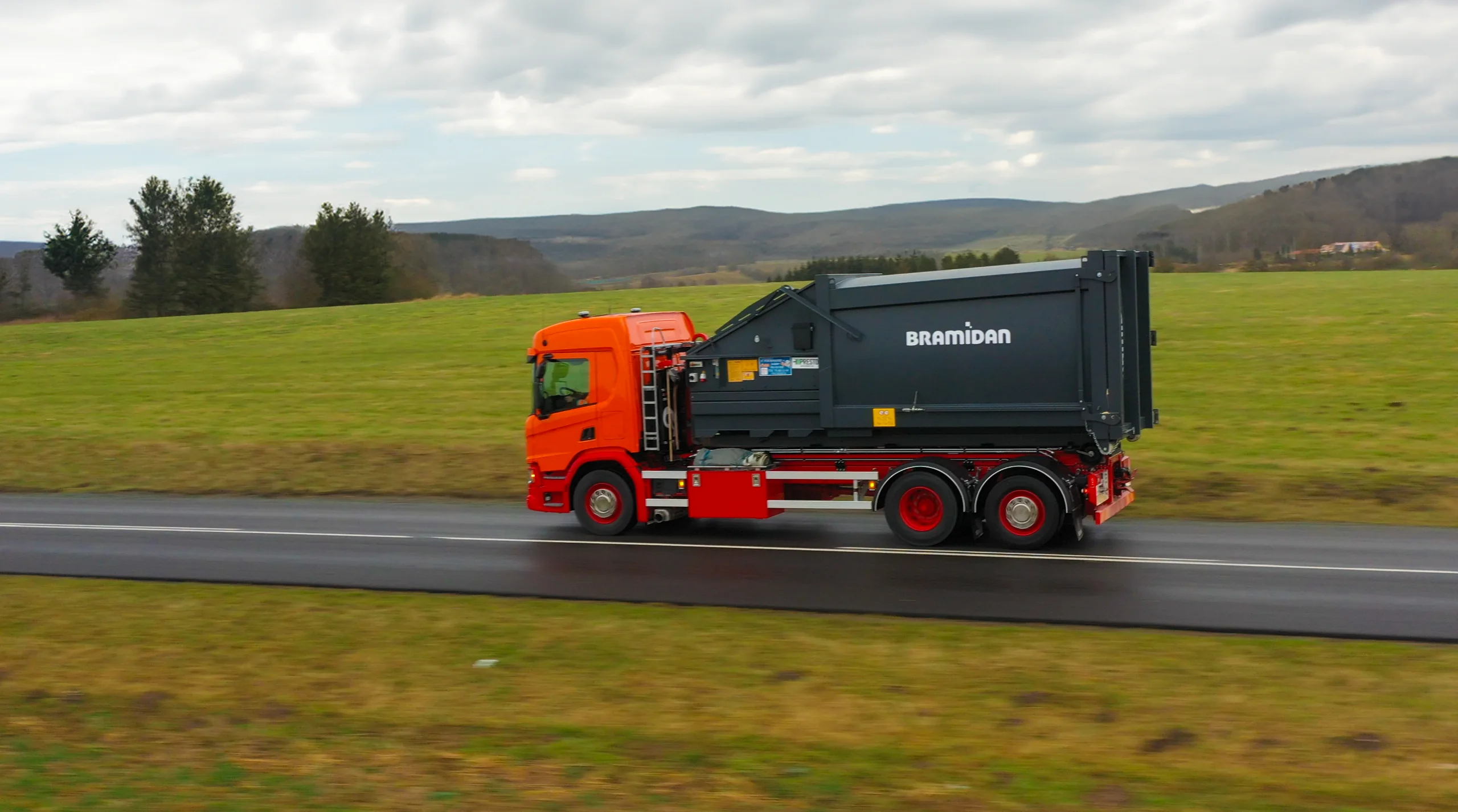
Compactor container – flexible waste solution with high capacity
Companies with varying waste amounts often need a solution that is both flexible and easy to install.
A compactor container combines the compaction unit and container into one integrated solution, making waste management simpler and more efficient.
By compressing waste directly in the container, the volume is reduced, and the need for frequent pickups is minimized.
At the same time, the solution requires minimal installation and can be quickly implemented into daily operations.
In this article, you will get a practical guide to compactor containers, where we review how they work, the benefits they provide, and when they are the right choice for your company.
In this guide, you will get
In this guide, we will cover:
- What a compactor container is
- How it works
- Advantages of the solution
- When it should be chosen
- The difference between self-contained and stationary compactor
- Typical applications
What is a compactor container?
A compactor container is a mobile waste solution, where the compaction unit is permanently mounted on the container.
When the container is full, the entire unit is collected and replaced with an empty one.
A compactor container aims to reduce waste volume by compressing the material directly in the container. At the same time, the need for extensive installation is minimized, as the compaction unit and container are combined in one solution. This creates flexible waste management, where companies can easily adapt the solution to their space conditions and waste amounts.
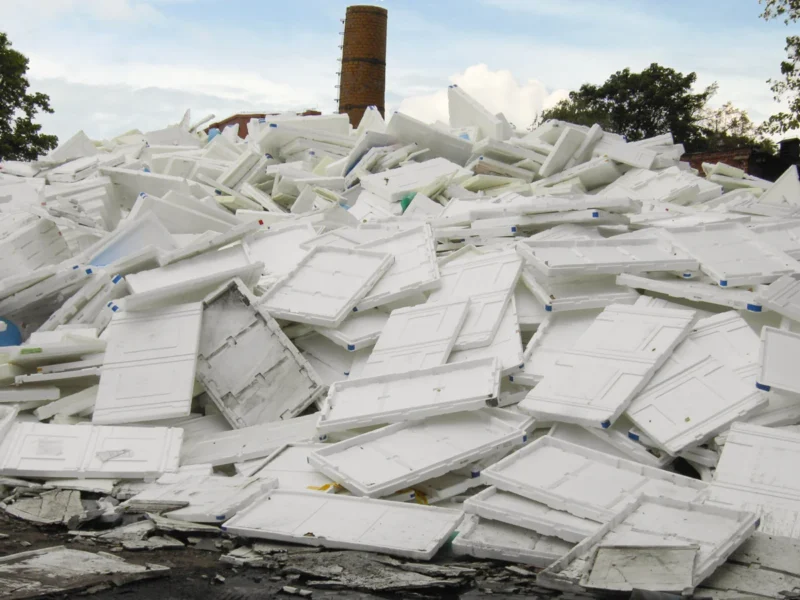
A compactor container is typically used for the following waste types:
- Residual waste
- Plastic
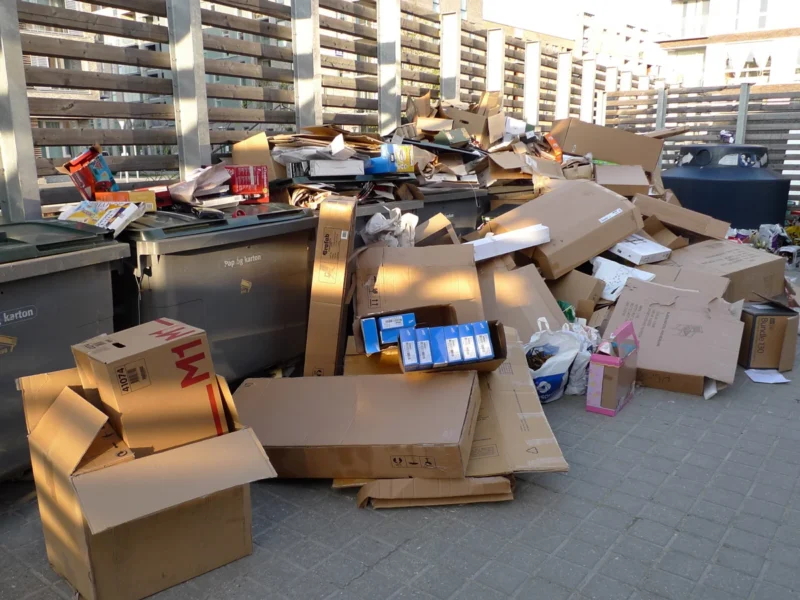
- Packaging
- Production waste
- Retail waste
How does a container compactor work?
The process proceeds as follows
Waste is introduced
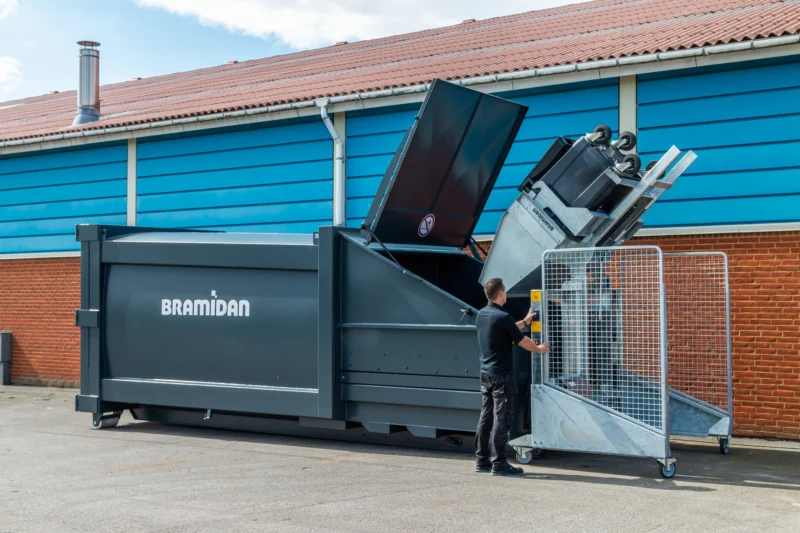
The waste is fed into the compactor container via a chute or slide. This can include residual waste, plastic, packaging, or other materials from the company’s daily operations.
Hydraulic system is activated
Once the waste is placed in the chamber, the hydraulic system is activated. The press plate moves forward and starts the compaction process, where the material is pressed together.
Waste is compressed in the container
The compactor container compresses the waste under high pressure and pushes it directly into the container. This significantly reduces the volume of the waste and better utilizes the container’s capacity.
Container is filled with tightly compressed material
After several compaction cycles, the container is gradually filled with tightly compressed waste. When the container is full, the entire unit can be picked up and replaced with an empty container.
The volume reduction can be up to 75%, depending on the material and model.
See the compactor container in operation.
Benefits of a compactor container
Quick installation
A compactor container can be installed quickly, as the compaction unit and container are combined in one solution. This means there is no need for extensive installation or major changes in the company’s waste area. In many cases, the solution can be put into use shortly after delivery.
Minimal space usage
Since the press and container are integrated into one unit, a compactor container typically takes up less space than solutions with a separate press unit. This makes it particularly suitable for companies with limited space for waste handling or where the waste area needs to be kept compact and organized.
Flexible solution
A compactor container is a flexible waste solution that can be adapted to companies with varying amounts of waste. It can easily be placed in different locations on the company’s premises and works well in environments where waste production varies throughout the year or between productions.
Quick replacement during emptying
When the container is full, the entire compactor container is collected and replaced with an empty unit. This makes emptying simple and ensures that waste handling can continue without prolonged operational interruptions. At the same time, the need for technical handling on site is reduced.
When should you choose a compactor container?
A compactor container is the right solution when
- Space is limited
- The installation needs to be temporary
- Waste amounts vary
- Minimal technical installation is desired
- There is a need for quick implementation
Typical industries where a compactor container is ideal
- Retail stores
- Supermarkets
- Logistics centers
- Construction sites
- Manufacturing companies
Compactor container vs. stationary compactor
A compactor container consists of a single unit where the press and container are integrated, making installation quick and flexible.
When emptied, the entire unit is replaced, making the solution easy to handle in businesses with varying waste volumes.
A stationary compactor, on the other hand, has a fixed installed press unit, where only the container is replaced when emptied.
This type of solution is often more suitable for businesses with large and continuous waste streams, where waste is handled in larger quantities over a longer period.
Stationary solutions can be more efficient with very high and constant waste streams.
See stationary compactors here.
What is the cost of a compactor container?
The price depends on:
- Container size
- Compression force
- Adaptation to building
- Service agreement
The investment can typically be recouped through:
- Fewer pickups
- Lower transportation costs
- Reduced waste fees

Intelligent waste management with BRA-IN
A compactor container can be digitally integrated with our software, BRA-IN, which provides:
- Full overview of fill level
- Data on usage patterns
- Optimization of pickups
- Documentation of efficiency
This enables data-driven waste optimization and better control over costs.

FAQ about compactor container
What is a compactor container?
A compactor container is a mobile waste solution, where the compaction unit is attached to the container and compresses waste directly into it.
What is the difference between a compactor container and a stationary compactor?
A compactor container is a combined unit, while a stationary compactor has a separate container.
How much does a container compactor reduce waste?
Typically up to 75%, depending on material and model.
When is a compactor container the best solution?
When waste amounts vary, space is limited, or the installation needs to be flexible.
Questions? Contact Us Today