

Balers – efficient compaction of cardboard and plastic in businesses
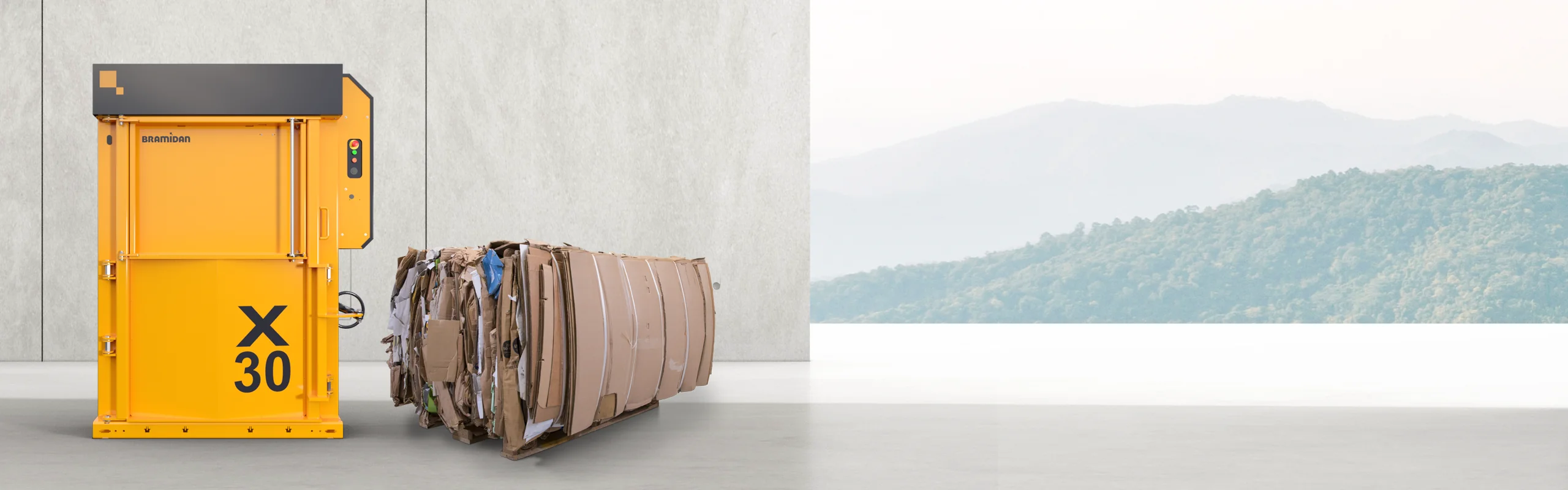
Effective waste management with a baler
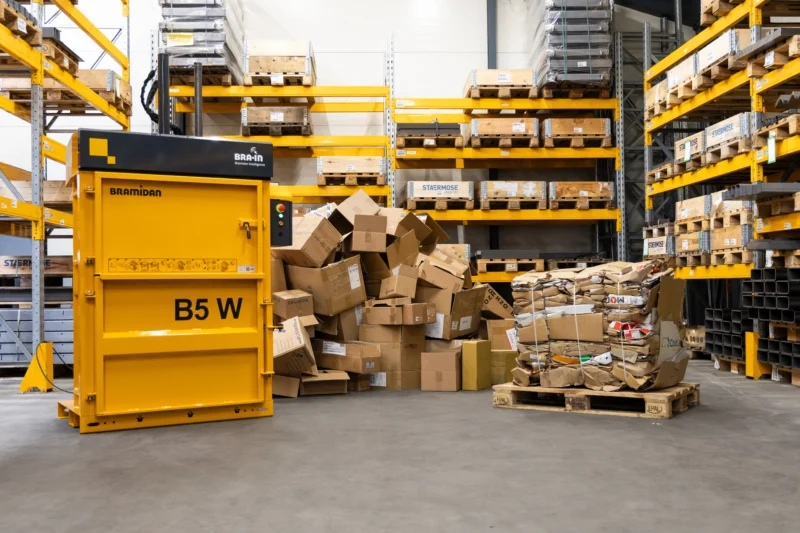
Companies in retail, warehousing, logistics, webshops, and production generate large amounts of recyclable materials such as cardboard and plastic. Without proper handling, the materials take up unnecessary space and create inefficient waste logistics.
Balers compress materials into dense, uniform bales, significantly reducing volume and increasing recycling value – The result is better logistics, lower costs, and saved internal time spent on waste management.
Guide to balers
In this guide, we will cover
• What a baler is
• How it works
• The difference between vertical and horizontal balers
• Advantages of balers
• How to choose the right solution
See all Bramidan balers here
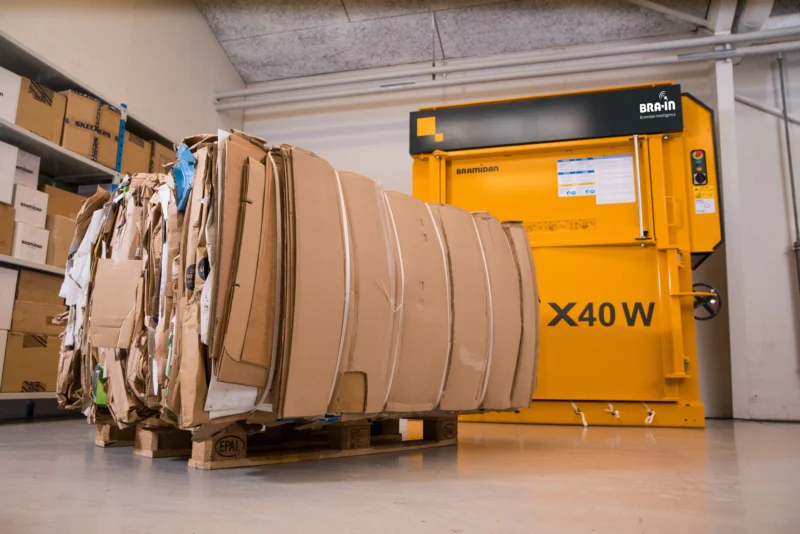
What is a baler?
The purpose of a baler in operation is to
• Reduce waste volume by up to 90%
• Improve logistics
• In some cases, create the possibility for revenue from recyclable materials
• Reduce time consumption
How a baler works
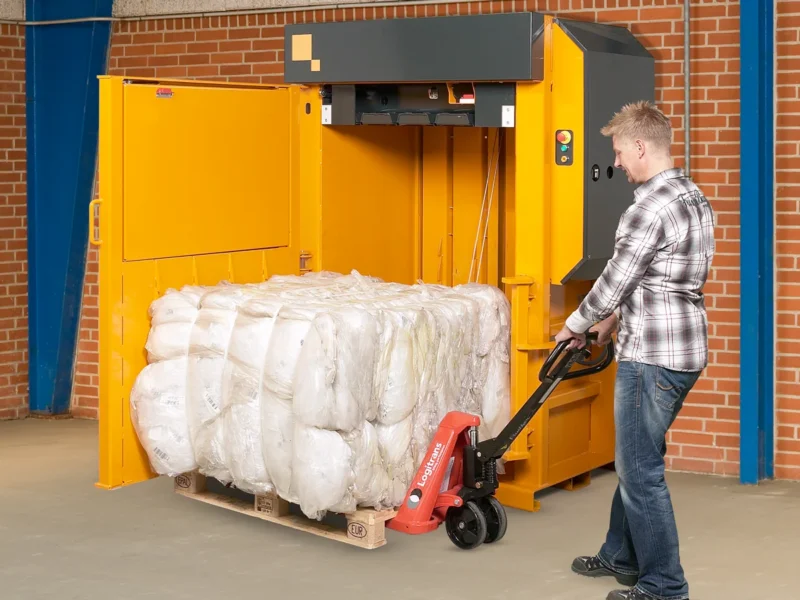
1. The material is placed in the baler’s chamber
2. The press cycle is activated via the control panel and hydraulic pressure compresses the material
3. The machine automatically indicates when it is full
4. The bale is tied
5. The finished bale is tipped out onto a pallet
The result is a stable, compact, uniform bale ready for storage or pickup.
See baler in operation here
Benefits of balers
There are several advantages associated with having a baler available to assist with waste management. Here are the most important ones described
- Up to 90% volume reduction
- Cardboard and plastic take up significantly less space after compaction, freeing up floor space.
- Increased recycling value
- Compact bales have a higher market value than loose material (improving the value is the overall equation, as waste prices vary).
- Lower transportation costs
Fewer pickups mean lower operating costs. - Improved working environment
- Reduces clutter, fire risk, and manual lifting.
Vertical vs. horizontal balers
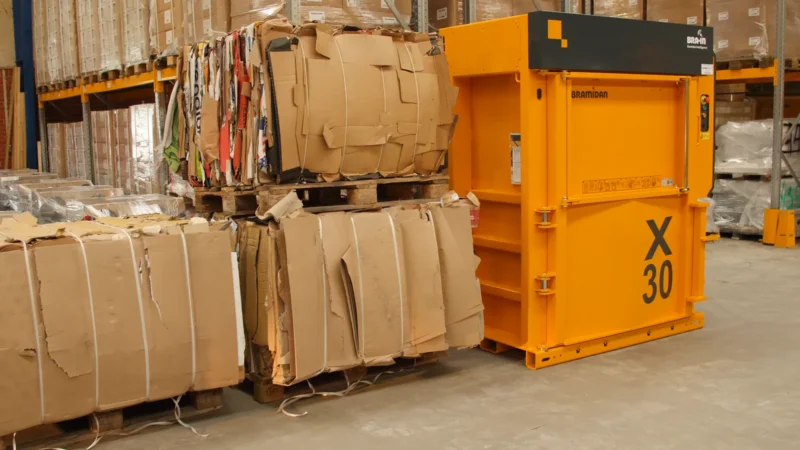
Vertical balers
A vertical baler is compact and suitable for small and medium-sized businesses.
Characteristics
• Compact design
• Manual binding
• User-friendly operation
• Ideal for retail, webshops, and storage
See our vertical models here
Horizontal balers
A horizontal baler is developed for larger and continuous waste streams.
Characteristics
• High capacity
• Automatic binding
• Suitable for industry
• Efficient for large amounts of cardboard and plastic
• The waste is fed to the machine via conveyor belt, tip cart, or other automated solution
How do you choose the right baler?
When choosing a baler, you should consider
- Material type
Cardboard, plastic (e.g., soft plastic, plastic bottles/cans), big bags, cans, textiles, or all of the above? - Daily volume
How many kilos are generated per day/week/month?
How many emptyings of the existing solution - Level of automation
Manual or automatic solution? - Space conditions
Available floor space and access conditions.
A correctly dimensioned baler ensures optimal compaction and economic efficiency.
Do you need guidance? Our specialists are happy to help you find the solution that suits your needs
What does a baler cost?
The price of a baler depends on
• Capacity
• Degree of automation
• Installation
• Service agreement
The investment can often be recouped through
• Savings on waste transport
• Potential revenue from recyclable materials
• Reduced time consumption
• Fewer onsite service calls
Baler vs. compactor
A compactor is often used for large amounts of cardboard and plastic as well as mixed waste (dry, wet organic, or mixed residual waste), where the material is compressed directly into a closed container. Here, the primary purpose is to reduce volume and optimize waste management rather than to create recyclable bales.
Read more about compactors here.
Operation, safety, and quality
At Bramidan, we focus on
• High compaction force
• Documented reliability
• User-friendly operation
• Compliance with safety standards
• Long lifespan
A reliable baler reduces downtime and ensures consistent performance over time.
Intelligent waste management with BRA-IN
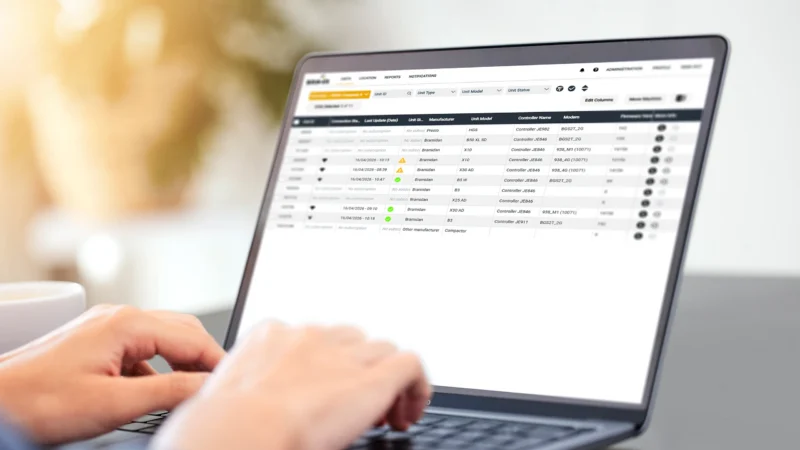
Balers can be combined with our online control system BRA-IN, which provides
• Overview of usage patterns
• Notifications when the machine needs to be emptied
• Optimization of pickups
• Documentation of efficiency
• Possibility for remote support without a physical visit
This enables data-based optimization of waste management.
FAQ about balers
What is a baler?
A baler is a hydraulic machine that compresses recyclable materials such as cardboard and plastic (soft plastic, plastic bottles/cans), big bags, cans, and textiles into dense and compact bales. Balers significantly reduce the volume of waste and make the materials easier to handle, store, and transport. At the same time, they can increase the value of recyclable materials by collecting them into uniform bales.
How much does a baler reduce waste volume?
A baler can typically reduce waste volume by up to 80–90%, depending on the material type and the machine’s capacity. By compressing the material into stable and compact bales, the waste takes up significantly less space, which can reduce the need for frequent pickups and free up space in the waste area.
What is the difference between vertical and horizontal balers?
The difference between vertical and horizontal balers primarily lies in capacity and automation level. Vertical balers are compact and suitable for smaller waste amounts in stores, webshops, kitchens, schools, or warehouses. Horizontal balers have higher capacity, automatic binding, and are typically used in industry and logistics centers.
When should one choose a horizontal baler?
A horizontal baler is the right solution for companies with large and continuous amounts of cardboard or plastic. These balers can handle high capacity where the waste is fed to the machine via conveyor belt, tip cart, or other automated solution, making them suitable for production, distribution centers, and other environments with large waste streams.
Questions? Contact Us Today